
Tel :
+86-15905996312Email :
machine@hongancn.com
Tel :
+86-15905996312Email :
machine@hongancn.com
Modern semiconductor packaging manufacturing is rapidly advancing toward miniaturization, high precision, and ultra-high reliability. Every preprocessing thermal step directly dictates the yield, stability, and service life of IC chips, power semiconductors, and electronic components. Among all pre-packaging processes, preheating stands as one of the most critical yet frequently overlooked procedures. Improper preheating consistently results in common defects such as delamination, bubble formation, warpage, and inadequate epoxy adhesion, leading to significant product waste and inconsistent batch quality.
Drawing on over two decades of independent research and development, manufacturing, and global on-site commissioning experience in preheating equipments, Shunhao Machines factory will present the core advantages, typical industrial applications for semiconductor-grade rolling pole preheater machines.
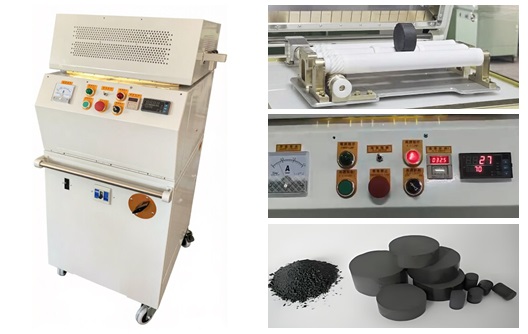
What Is a Semiconductor-Grade Roller Preheater?
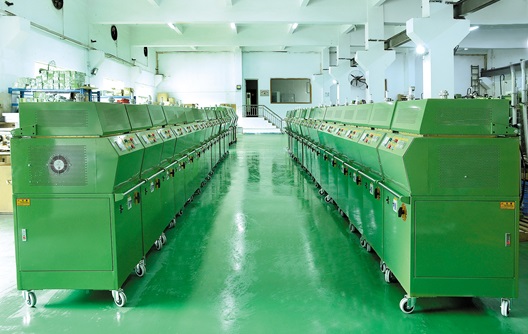
A semiconductor-grade roller preheater is a high-precision, dust-free, continuous thermal processing equipment optimized specifically for semiconductor encapsulation and preprocessing workflows. It is iteratively upgraded from mature industrial roller preheating technology, with comprehensive improvements in temperature control accuracy, structural sealing, transmission stability, and anti-pollution performance compared with ordinary roller preheaters used for traditional industrial materials.
Core Advantages of Roller Preheater for Semiconductor Packaging Production
Typical Industrial Application Scenarios
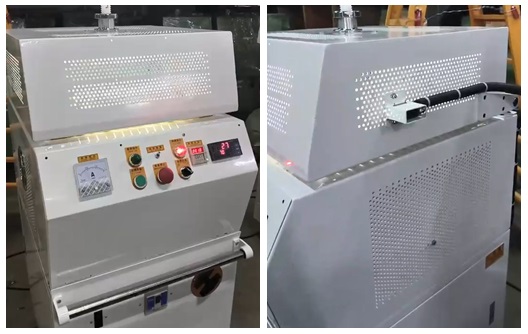
Epoxy Molding Compound (EMC) serves as the primary packaging material for semiconductors. It encapsulates IC chips, lead frames and internal wiring to offer mechanical protection, moisture resistance, insulation and anti-corrosion performance. However, EMC is supplied as solid pellets or tablets at room temperature. Without proper thermal preprocessing and softening before molding, manufacturers will face a series of severe production challenges, which makes the roller preheater an indispensable device in this workflow.
The preheating procedure on a semiconductor-grade roller preheater follows a controlled gradient heating profile. As solid EMC moves forward on the synchronous roller conveyor, multi independent temperature zones deliver consistent heat. Material temperature rises steadily to reach the targeted softening window, avoiding overheating or local scorching. Overheating causes premature curing of epoxy resin; insufficient heating leads to inadequate softening and unstable fluidity. Unlike static batch ovens that suffer uneven heating across stacked EMC raw materials, continuous roller transportation ensures every single EMC pellet receives equal thermal exposure. Batch-to-batch temperature deviation is minimized.
Preprocessing and controlled softening of epoxy molding compounds is not a simple heating step, but a core thermal process determining encapsulation quality. The continuous roller preheater delivers uniform, low-thermal-shock heating for EMC, stabilizing material fluidity, removing excess moisture and protecting fragile internal semiconductor components. For high-volume semiconductor packaging factories and equipment distributors, matching a suitable roller preheating solution for EMC pretreatment directly lifts production yield and creates sustainable manufacturing advantages.
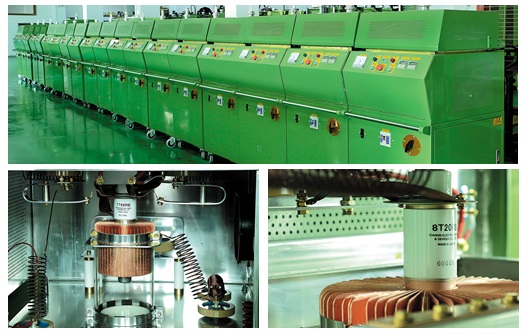
Shunhao Machines provides standardized and customized semiconductor-grade epoxy resin material roller preheater solutions for global semiconductor packaging factories, procurement managers and industrial equipment distributors. We support free equipment selection guidance, process scheme customization, sample testing and global full-cycle after-sales service. For further details, welcome to send us an Email: machine@hongancn.com.
FAQ
Q1: Why preheat and soften EMC before semiconductor molding?
A1: Room-temperature EMC is hard and low-fluidity. Proper preheating softens the material, reduces viscosity, ensures uniform mold filling, minimizes voids and wire sweep, and removes surface moisture for stable encapsulation quality.
Q2: What happens if EMC preheating is insufficient?
A2: Under-heated EMC flows poorly, causing incomplete filling, micro voids and uneven molding.
Q3: What are the payment terms?
A3: Machines: 30% by TT in advance & 70% by TT after inspection but before shipment.

No.173, Jitai Rd., Qingmeng Ind Zone, Quanzhou City, Fujian, China

Email : machine@hongancn.com

Different models of machines available and different surface or texture of molds can be made from Shunhao Factory. Rich experience since 2002 will reduce the error-cost when you running your tableware factories.


Copyright © 2026 Quanzhou Shunhao Melamine Moulds Co.,Ltd. All Rights Reserved.
Blog ipv6 network supported